


Adviсes • 25 May, 2026
Protection from pickpockets in popular tourist areas
Every trip begins with pleasant anticipation: choosing a route, preparing documents, and buying plane tickets. However, even a well-organized trip can be spoiled by an unpleasant situation, such as pickpocketing. These incidents most often occur in airports, on public transport, in markets, and near popular attractions, where tourists are distracted by the sights and let their guard down.
The Centrum Air team recommends paying attention to personal safety in advance to ensure your trip leaves you with only positive memories. In this article, we'll explore how pickpockets operate, which precautions are truly effective, and what to do if a theft does occur.
How Pickpockets Operate
Pickpocketing rarely looks the way it's shown in the movies. An experienced thief doesn't hide in an alley or act aggressively; on the contrary, they try to blend in with the crowd and take advantage of a moment when a person is distracted for just a few seconds. Most often, criminals operate in crowded places where physical contact is considered normal.
Understanding common schemes helps you spot suspicious behavior more quickly and reduces the likelihood of becoming a victim. Many tourist cities see nearly identical tactics, so basic precautions work regardless of the country or travel itinerary.
Typical pickpocketing scenarios:
● Creating a distraction. One person "accidentally" spills a drink, asks a question, or asks for help with a map, while an accomplice discreetly tries to take your wallet or phone;
● Crowds on public transport. On the metro, buses, and escalators, pickpockets take advantage of the tight spaces and constant movement of people, which means a theft might not be noticed immediately;
● Queues near attractions. While tourists are checking tickets, looking at a navigation app, or talking, it only takes an attacker a few seconds to open a backpack or bag;
● The "helpful" stranger. A stranger points out a stain on your clothes, helps you pick up something you dropped, or tries to strike up a conversation, all to divert your attention from your personal belongings;
● Working in a team. In popular tourist areas, pickpockets often operate in pairs or groups of three: one creates a distraction, the second commits the theft, and the third immediately makes off with the stolen item.
Even knowing these schemes, it's important to remember that being vigilant shouldn't turn into constant stress. A tourist's main goal is to reduce risks in advance and make their belongings less accessible to thieves. This is why safety begins before you even leave home.
Pre-trip preparation

Many travelers only start to think about safety after arriving in another country. In reality, the main precautions should be taken while still at home. Simple preparation takes very little time but can help you avoid serious problems if your documents or bank cards are lost or stolen.
Smart money management, backup copies of documents, and a well-thought-out plan of action will help you handle unpleasant situations much faster and avoid wasting precious vacation time on unnecessary complications.
What to do before your trip:
● Separate your money and documents. Don't keep all your cash, cards, and passport in one place–it's better to distribute them among different pockets and bags.
● Make digital copies of your documents. Save photos of your passport, visa, and insurance to cloud storage or email them to yourself.
● Prepare a backup bank card. It's convenient to carry one card with you and leave a second one in the hotel safe in case your primary card is stolen or blocked.
● Save your bank and insurance company contacts. It's best to keep hotline numbers separately so you can access them even if you lose your phone.
● Use RFID protection for your cards. Cardholders with RFID protection help reduce the risk of unauthorized data scanning in crowded places.
These preparations don't require a lot of expense but significantly increase your level of security while traveling. It's important to consider not only how you store your money and documents but also the everyday gear you use when out for a walk or on public transport.
The Right Gear
Pickpockets almost always choose people whose belongings are easiest to steal unnoticed. Open bags, unfastened pockets, and backpacks worn on the back automatically make a tourist more vulnerable. This is why choosing comfortable and secure gear plays an important role during your travels.
You don't have to buy expensive, specialized gear. In most cases, a few simple solutions are enough to make your belongings harder to access and make theft too risky for a would-be thief.
What helps protect your personal belongings:
● A chest pouch worn under your clothes. Suitable for storing a passport, the bulk of your cash, and a backup bank card;
● A backpack with hidden zippers. Models with access to the main compartment from the back make theft significantly more difficult;
● A waist bag worn in front. In a dense crowd, you can constantly monitor the bag's position and can hold onto it with your hand;
● Mini-locks or carabiners on zippers. Even a small obstacle can deter a pickpocket who relies on acting as quickly as possible;
● Clothing with zippered internal pockets. Such pockets are convenient for storing your phone, documents, and cash while you're out and about.
It's just as important to understand which habits and accessories, on the contrary, increase the risk of theft. Some common solutions may seem convenient, but they make personal items too accessible to thieves.
What to avoid:
● Open tote bags and bags without fasteners. It's easiest to discreetly take a wallet or phone from such bags;
● Thin cross-body straps. They are easier to rip off or cut in a crowd;
● Keeping your phone or wallet in your back pocket. This is one of the most common targets for theft in tourist cities;
● Large external pockets without buttons or zippers. They allow someone to quickly pull out your things with even fleeting contact;
● Avoid showing off expensive accessories. Watches, gadgets, and large sums of cash attract unwanted attention.
Even the most secure bag doesn't guarantee complete safety if you lose focus in a crowd. Therefore, your behavior during walks, tours, and on public transport also plays an important role.
Basic safety rules on the spot
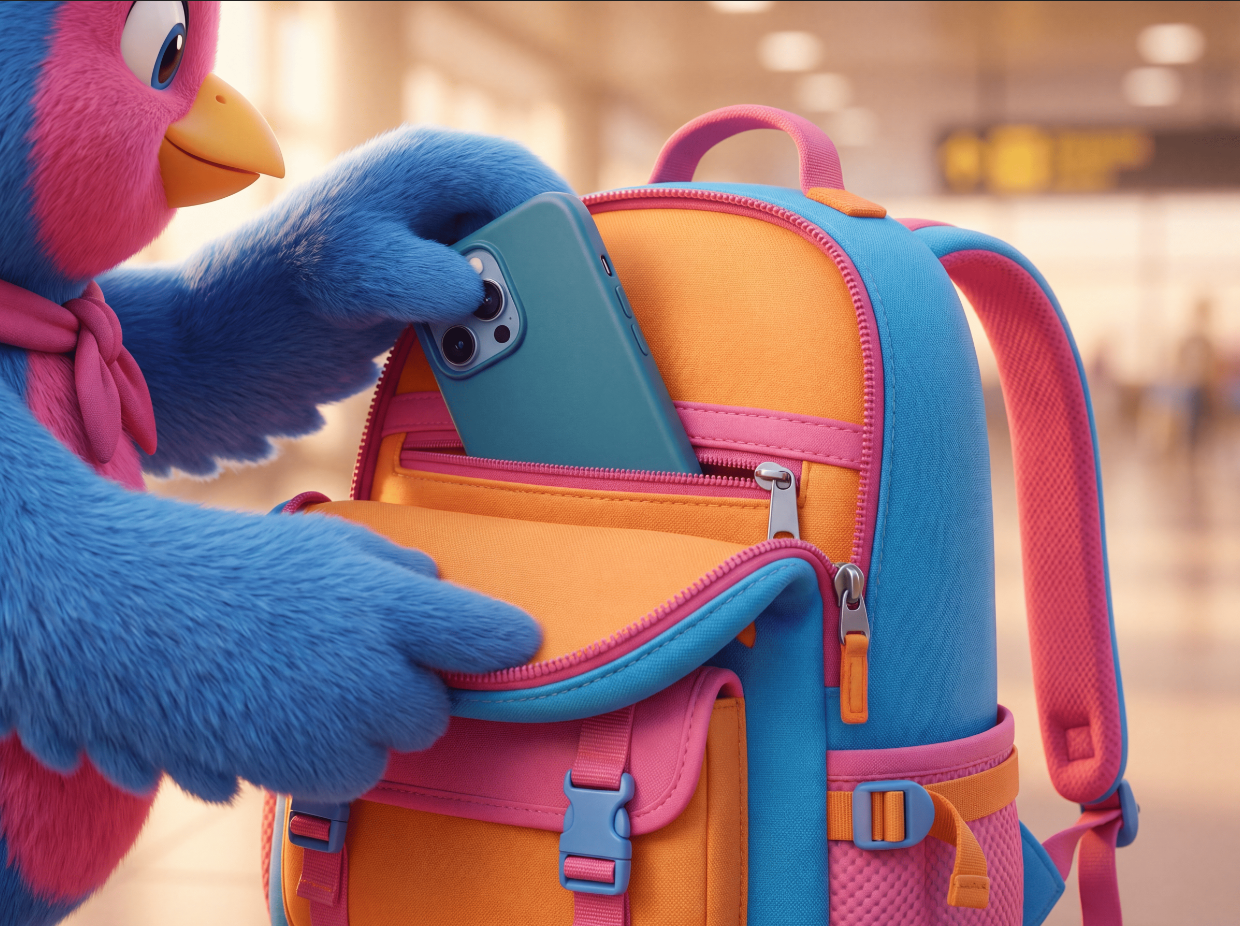
In tourist areas, people are more often distracted by taking photos, navigating, and sightseeing. It is at these moments that pickpockets usually choose their victims. Simple habits can significantly reduce the risk of theft without the need to be constantly on edge. It is especially important to remain vigilant in crowded places, as this is where it is easiest for thieves to go unnoticed.
How to act in crowded places:
● Keep your bag in front of you. On transport and in a dense crowd, it's better to take your backpack off and hold it in your hands.
● Don't flash your money and gadgets. It's better to count cash or hold your phone for a long time away from the crowd.
● Use your navigation app carefully. If you need to check the route, it's best to stop near a wall or in a quieter spot.
● Pay attention to unusual behavior. Intrusive offers of help, accidental bumps, and attempts to distract you with conversation could be part of a scam.
● Watch your belongings in cafes and restaurants. Don't leave your phone or bag on the edge of the table or hang your backpack on the back of a chair.
It's important to remember that even following all recommendations doesn't completely eliminate the risk. Pickpockets sometimes work in groups and use well-rehearsed schemes. Therefore, it's useful to know in advance how to act in case of theft.
If a theft does occur
Even if you take every precaution, no one is immune to unforeseen circumstances. The main thing in such a situation is not to panic and to act quickly according to a pre-conceived plan. Every minute of delay reduces the chances of getting your money back or blocking charges to your cards.
A well-thought-out plan helps avoid unnecessary stress and resolve organizational issues more quickly, especially if the incident happens abroad.
Step-by-step instructions after discovering a theft:
- Block your bank cards immediately. Do this through your bank's mobile app (if you have internet access) or by calling the hotline. It's best to save the support service numbers in a separate file on your phone and in the cloud beforehand – that way you won't lose them along with your wallet;
- Go to the nearest police station. A police report is necessary for an insurance claim and to obtain a document certifying the temporary invalidity of your stolen passport. Ask for a stamped copy of the report – you will need it for filing for compensation and for the consulate;
- Contact your country's consulate. If your passport is stolen, the consulate will issue a temporary travel document (certificate of return). To get one, you will need the copies of documents you made before your trip and the police report;
- Notify your insurance company as soon as possible. Most travel insurance policies cover the theft of documents and some personal belongings for amounts ranging from €500 to €2,000. Clarify the terms of your policy in advance, and in an emergency, call the number listed on your insurance within 24 hours of the incident;
- Check if a tracking system can help. If your smartphone was stolen and the "Find My Device" feature was enabled, try to track it using another gadget. In rare cases, the police cooperate with such services (for example, in London or Tokyo), but you shouldn't count on it.
After resolving the main organizational issues, it's important not to let an unpleasant situation completely ruin your trip. In most cases, proper preparation and timely action help minimize the consequences of theft.
Conclusion

To sum up, we can highlight the most important, field-tested tips that work in any country in the world. Make them a rule, and the probability of becoming a pickpocket's victim will decrease by 90%.
A short checklist for the safe tourist:
● Keep your documents and main cash in a chest pouch under your clothing. This is the most secure place–to get to it, a thief would have to unzip your jacket, which is impossible to do unnoticed;
● Never put your phone in the back pocket of your jeans or hold it in your hand unnecessarily. For your smartphone, buy a separate small belt pouch or use an inner zippered jacket pocket;
● In crowds and on public transport, always hold your bag against your chest, and take your backpack off your shoulders and carry it in your hands. This way, you have full control over access to all its compartments;
● Make digital copies of all important documents and save them to the cloud. This is the only thing that will genuinely help you quickly replace a passport in a foreign country without excessive bureaucracy;
● Split up your cash: carry no more than your daily budget with you, leaving the rest in your hotel's safe. If you lose your wallet or it gets stolen, you'll still have money for the remaining days;
● Avoid showing off expensive electronics or wads of cash. Count your cash and take out your camera only when you are indoors, or at least with your back to the crowd;
● Trust your intuition: if it seems like someone is too close or is acting strangely, move away, check your pockets, or change your position. More often than not, this feeling doesn't come out of nowhere.
By following these simple rules, you can enjoy your trip in peace without constantly looking over your shoulder. It's impossible to completely eliminate the risk of pickpocketing while traveling, especially in popular tourist spots with large crowds. However, being attentive, well-prepared, and taking simple precautions will significantly reduce the likelihood of unpleasant situations. Travel should bring new experiences and positive emotions. And basic safety rules will help you stay calm and focus on what's most important – relaxing, meeting new people, and exploring new routes.
Become a guide to the world of travel


