


Uzbekistan • 22 January, 2026
Samarkand and Bukhara: two centres of one civilisation
In the history of Central Asia, it is rare to find cities that have retained not only political or economic significance but also an independent cultural role over the centuries. Samarkand and Bukhara are two such cities. They are often compared because both cities were major hubs on the Great Silk Road and determined the development of the region at different stages. However, it would be incorrect to reduce this comparison to competition: we are talking about different functions within the same civilisational system.
Samarkand developed as a political and imperial centre, while Bukhara became the religious and intellectual hub of the region. This difference determined their historical trajectories, architectural appearance and cultural environment, as well as how these cities are perceived today.
In this article, we will explain why Samarkand and Bukhara are not opposed to each other, but rather complement the overall picture of the medieval and early modern periods in the history of Uzbekistan.
Historical role: capital of power and centre of knowledge
The historical significance of Samarkand is primarily linked to its role as a political capital. The city repeatedly became the centre of large state formations, and the culmination of this status was the reign of Amir Timur in the late 14th and early 15th centuries. During this period, Samarkand was deliberately transformed into a symbol of imperial power and state representation.
During the Timurid era, the city served as an administrative, military and diplomatic centre. Resources were concentrated here and key political decisions were made, while the architecture was intended to visually confirm the scale of power and its claim to universality. Samarkand acted not only as the capital, but also as an instrument for shaping the imperial image.
Bukhara developed according to a different historical logic. Its significance was formed around religious and educational traditions. From the early Middle Ages, the city became one of the key centres of Islamic scholarship, where madrasas operated, theological schools were formed, and hadith studies and Sufi thought developed. This is why Bukhara was given the names ‘The Noble’ and ‘The Dome of Islam’.
Unlike Samarkand, Bukhara rarely played the role of the main political capital of a large empire, but remained stable as the spiritual and intellectual centre of the region. Even during periods of political change, it ensured the continuity of religious, legal and educational traditions.
Architecture and layout
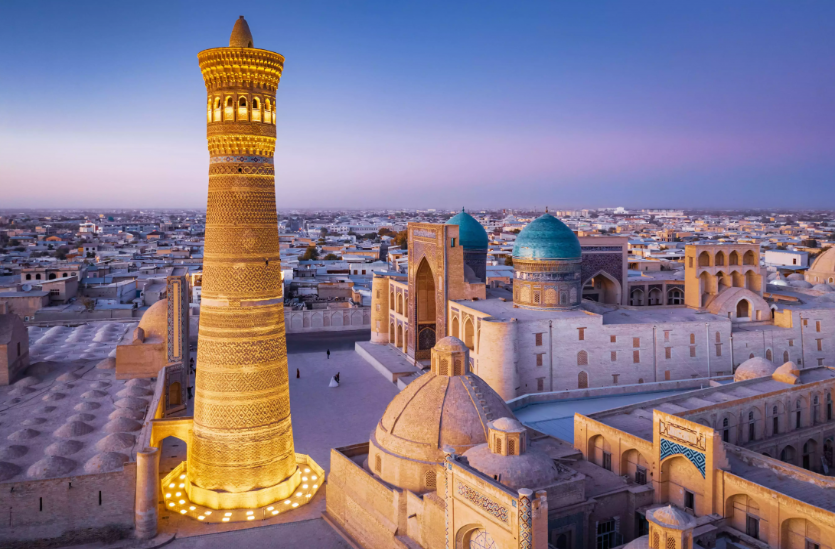
The architectural appearance of Samarkand and Bukhara directly reflects their historical functions. The space in these cities is organised according to different principles, and this difference is noticeable at first glance.
Samarkand was formed as a city of representation. Its key architectural ensembles are built around open spaces and large squares. The Registan ensemble occupies a central place – an example of a conscious urban composition, where architecture works as a single whole. Large portals, tall minarets and vast squares create an effect of visual dominance and emphasise the city's status as a capital.
Samarkand architecture is characterised by symmetry, intricate ornamentation and the active use of glazed ceramics. These elements reinforce the impression of grandeur and are designed to be viewed from a distance. The space here is not closed, but open – the city seems to be constantly facing the viewer.
Bukhara, on the contrary, was built as a city of inner life. Its architecture is less demonstrative and closely linked to everyday life. The main materials are burnt brick and terracotta, which give the buildings a visual restraint and integrity. Decor is present but does not dominate, giving way to proportions and texture.
The layout of the historic centre of Bukhara is dense and multi-level. Narrow streets, passageways, courtyards and shopping domes create a feeling of a closed but lively space. The Poi-Kalyan and Lyabi-Hauz ensembles do not overwhelm with their scale, but fit organically into the urban fabric, becoming part of the everyday route.
The atmosphere and rhythm of the city
The difference between Samarkand and Bukhara is particularly noticeable in the overall rhythm of city life. The atmosphere here is shaped not only by historical heritage, but also by how the city is used today – by tourists, residents and city services.
Samarkand is perceived as a city of open space and movement. Its key historical areas are designed for an active flow of visitors, visual perception and short, intense itineraries. Large squares, straight perspectives and the distance between objects create a sense of scale and dynamism. The city is oriented towards demonstration, which directly influences the nature of one's stay there.
The tourist infrastructure reinforces this effect. The main attractions are arranged in the logic of mandatory points on the route, which creates a strong first impression but is less conducive to a long and leisurely stay in one place.
Bukhara offers a different type of interaction. Here, the rhythm of the city is slower, and the space does not impose a rigid scenario. The historic centre is not divided into main and secondary areas: monuments, residential quarters and commercial spaces are intertwined.
In Bukhara, it is not so much the visit to individual sites that is significant, but the very process of moving around the city. Narrow streets, courtyards, teahouses and craft shops form an environment in which it is easy to linger without a predetermined goal. This format contributes to a deeper and more personal perception of the city.
Culture and heritage
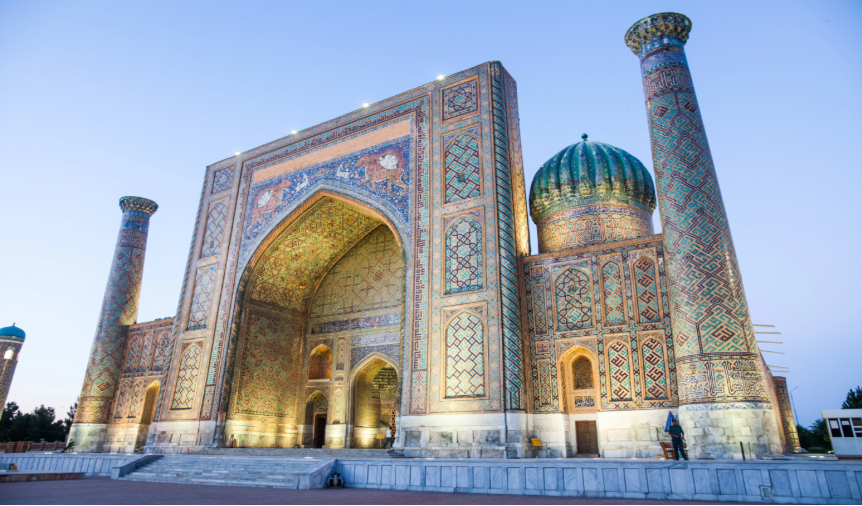
The cultural heritage of Samarkand and Bukhara was formed according to different logics, which is noticeable not only in the monuments, but also in the ways of preserving cultural memory.
Samarkand's cultural identity is closely linked to the image of state history and the names of rulers. The central figure here remains Amir Timur, around whom a significant layer of museum and memorial narratives has been built. The historical heritage of the city is often presented in the form of symbols – architectural ensembles, official dates, festivals and major cultural events.
This approach shapes the perception of culture as a representative and institutionally formalised phenomenon. It is fixed in museum spaces, restored complexes and official routes, serving as an object of demonstration and preservation.
Bukhara preserves a different cultural level – less formalised and deeply embedded in everyday life. The city is known as a centre of craft traditions: coinage, carpet weaving, ceramics, and wood carving. These practices continue to exist in workshops and commercial districts of the historic centre, rather than being isolated in a museum environment.
Intangible heritage also plays an important role. Tea houses, especially in the Lyabi-Hauz area, remain social spaces where the familiar rhythm of city life is maintained. Here, culture manifests itself not through symbols, but through repeated actions, forms of communication, and a stable way of life.
Different strategies for coexisting with the past
The interaction between historical heritage and modern life in Samarkand and Bukhara is based on different models, which directly influences the appearance of the cities.
Samarkand is developing as a major tourist and infrastructure centre. The city is actively investing in transport, hotels and public spaces. Historical ensembles here are often separated from the residential fabric and function as independent areas of attraction, which reinforces the contrast between restored monuments and new neighbourhoods.
This approach allows for effective management of tourist flows and preservation of key sites in a controlled environment, but it also reinforces the sense of fragmentation: historical and modern Samarkand exist side by side, without always intertwining.
Bukhara adheres to a more restrained strategy. Modern life is largely integrated into the historical environment. Residential buildings, workshops, shops and tourist infrastructure continue to function within the old city, and new elements are introduced cautiously, without sharply disrupting the established scale.
As a result, the historic centre of Bukhara remains not only a protected site but also a space for everyday use, which reduces the gap between the past and the present, although it limits the possibilities for large-scale development.
Conclusion
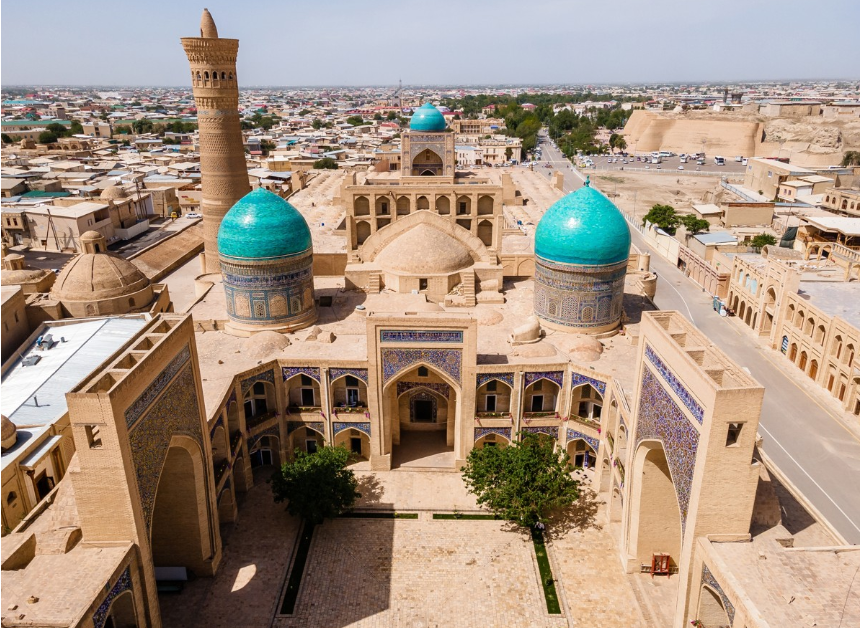
A comparison of Samarkand and Bukhara shows that these cities cannot be viewed in terms of ‘better or worse.’ They developed as different centres within the same civilisational model and still perform different cultural functions. Samarkand represents history through scale, statehood and architectural representation, providing a concentrated view of the political power and ambitions of the past. Bukhara, on the other hand, preserves its historical depth through its everyday environment, enduring traditions and the continuity of its urban fabric.
The most complete impression of Uzbekistan's cultural heritage comes from a sequential acquaintance with both cities. Travel practice confirms this logic: the optimal route is considered to be one that starts in Samarkand and continues in Bukhara. In Samarkand, it is enough to focus on the key architectural ensembles and museum spaces, allocating two full days for this. Bukhara requires a different approach – here, the value lies not only in individual objects, but also in the very process of moving around the city, so it is wise to allow two to three days.
In this combination, Samarkand and Bukhara provide a different but complementary understanding of the region: the former allows you to see history in its completed forms, while the latter allows you to feel its continuation in a living urban environment.
Become a guide to the world of travel


