


Adviсes • 17 July, 2026
Transportation in China: from high-speed trains to Didi
For many, traveling through China is associated with vast distances, multi-million megacities, and a complex public transport system. At first glance, it may seem that without knowing the Chinese language, it will be difficult to understand routes, applications, and payment methods. However, in practice, everything is much more convenient than many tourists expect.
Over the last decades, China has created one of the most modern transport systems in the world. High-speed trains run between cities, extensive metro networks operate within megacities, and a car can be ordered in minutes through a mobile application. Most services are aimed not only at local residents but also at foreign travelers. It is sufficient to understand the specifics of local transport in advance and install several useful applications.
High speed trains (Gaotie)
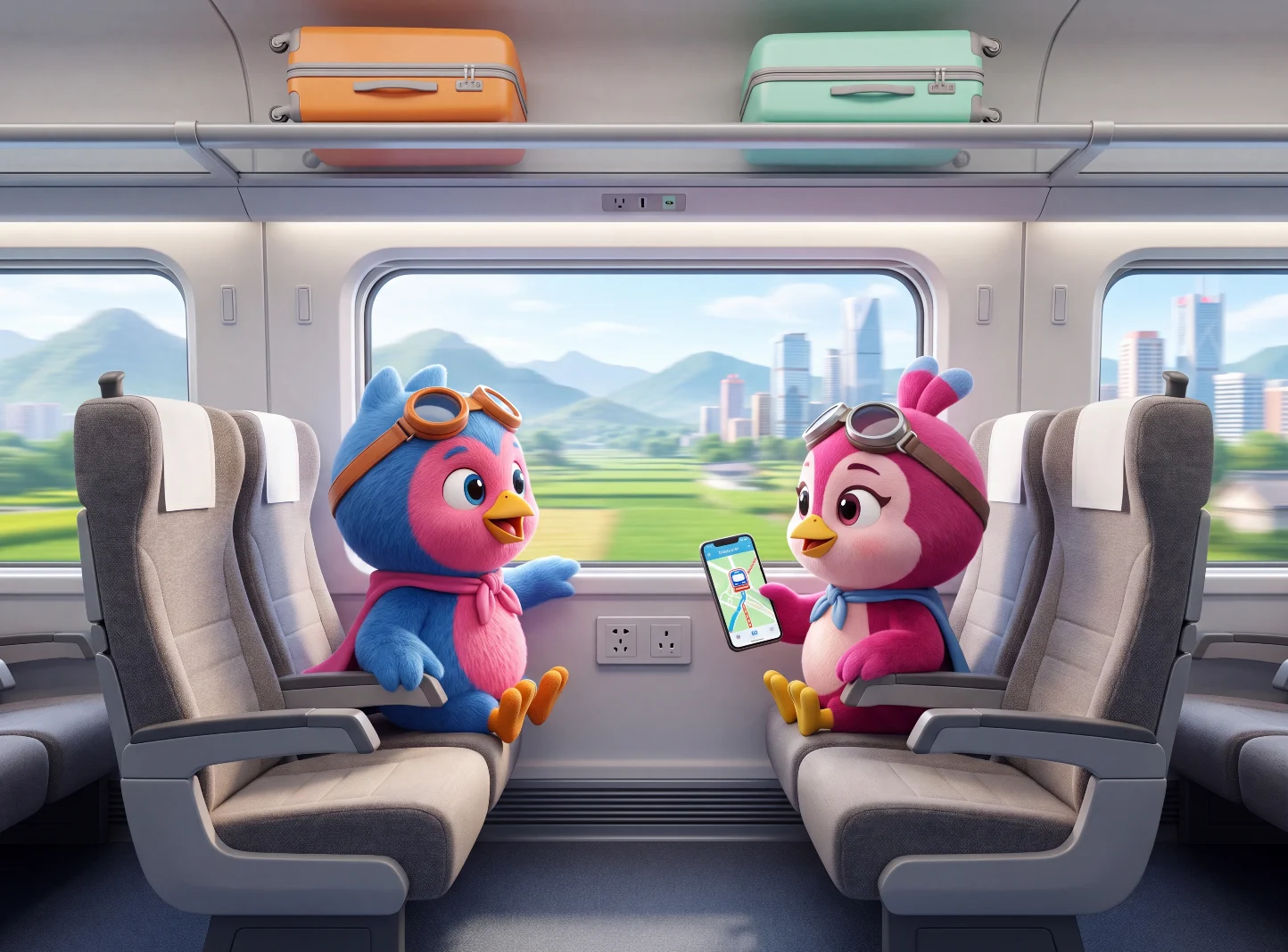
The railway network of high-speed trains in China is the longest in the world, exceeding 48 thousand kilometers. Trains with speeds of up to 350 kilometers per hour connect all major economic centers of the country. For example, the popular 1,300-kilometer route between Beijing and Shanghai is traveled by train in just four and a half hours. Boarding for such flights occurs at modern stations, which are usually located in the central districts of cities rather than on the outskirts.
For most standard trips, it is optimal to choose second class - this is the most popular option at a reasonable price with a three-plus-two seating arrangement, featuring plugs, air conditioning, and sufficient legroom. We recommend seats D or F - they are located near the entrance and the window, respectively (seat C is the middle one between two passengers, the most inconvenient). There are strict luggage restrictions on high-speed trains. No more than 20 kg can be transported free of charge, and the bag dimensions must not exceed 130 cm (the sum of three measurements). If you have two large suitcases, the space on the top shelf above your head may not be enough; you will have to place them in the vestibule or at the entrance to the carriage, but there is not enough space there; come early to take it first.
The cost of such a ticket from Beijing to Shanghai is approximately 550 to 650 yuan (approximately $81-$96). Please note that ticket sales for express routes open 15-30 days before the scheduled departure date. Foreign citizens can book tickets in several convenient ways depending on their preferences. We recommend choosing tools that allow you to make payments using foreign bank cards.
How to purchase high-speed train tickets:
● Trip.com portal. The easiest way to purchase tickets with English support, which does not require a Chinese SIM card for registration;
● China Railway 12306 app. The official service of China Railways, where the passport verification process in English can take several days.
If you use Trip.com, you will receive a confirmation after completing the payment, and in many cases, simply attaching your passport will be sufficient for boarding. Verification for the official 12306 application can also be completed in person at the ticket office of any station directly before departure 10 minutes in advance. It is recommended to arrive at the railway station 45-60 minutes before train departure due to mandatory baggage inspection. Access to trains is carried out via your foreign passport, which is automatically linked to the purchased electronic ticket. Fines for ticket refunds vary by time: if submitted 48 hours before departure, almost the entire amount will be refunded (minus 5%), for 24-48 hours - minus 10%, and for less than 24 hours - minus 20%. An hour before shipping, returns are no longer possible.
DiDi City Taxi
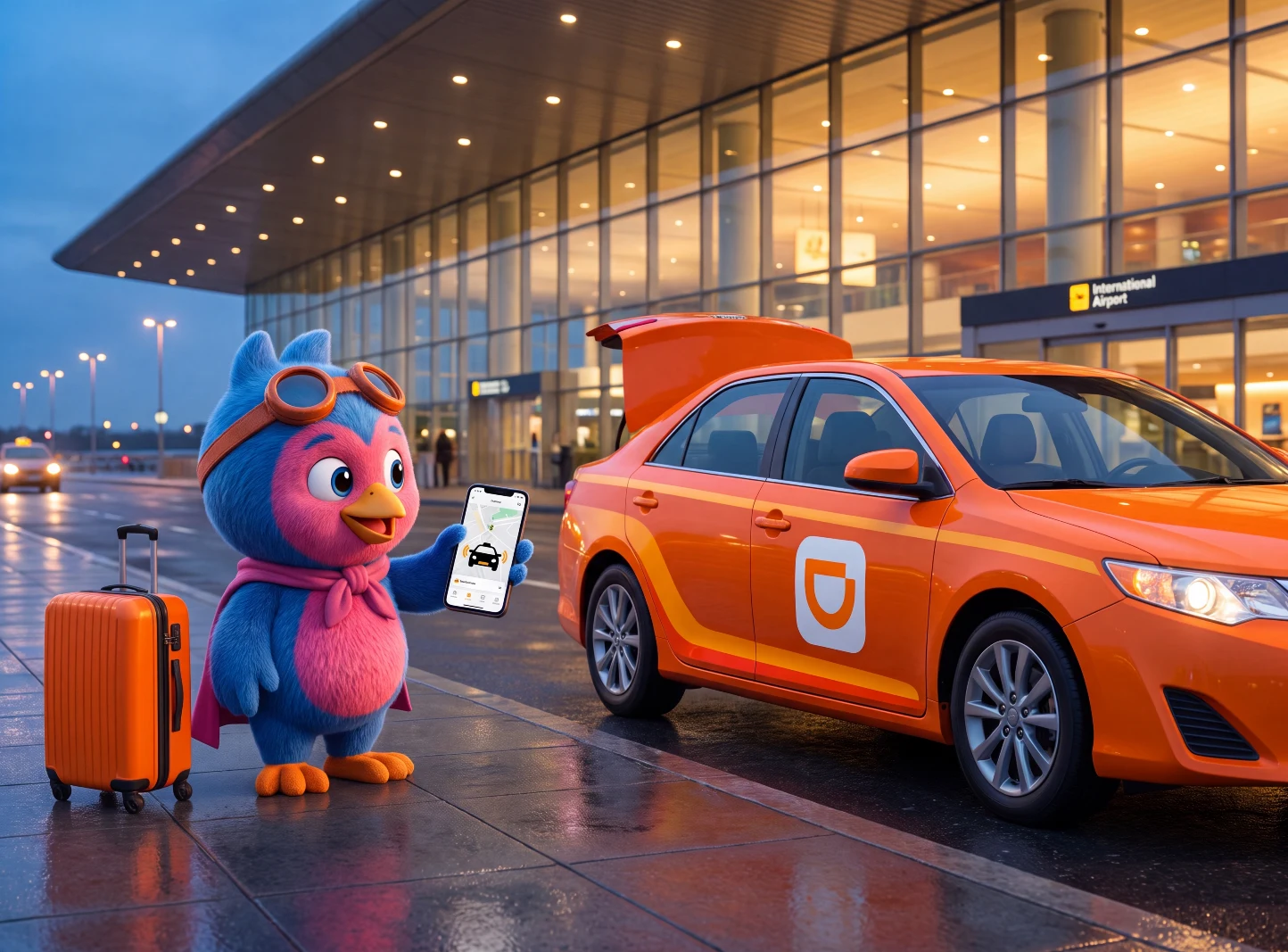
The main platform for ordering cars in all Chinese cities is the national giant DiDi. If public transport is not suitable for all routes, then Didi helps you quickly reach almost any point in the city. This service is the largest taxi ordering platform in China and performs the same role as Uber in many other countries. Millions of people use it daily, so vacant cars are usually only a few minutes away.
For tourists, Didi is especially convenient after arrival, when traveling with a large amount of luggage, or in the late evening, when you don't want to deal with transfers. The trip cost is displayed in advance, so the passenger understands the approximate costs before confirming the order. Foreign tourists can use this application in English by linking their usual payment cards.
DiDi Express (the cheapest, regular sedans), DiDi Premier (business class, more expensive), and DiDi Luxe (premium) are available in the app. For trips from the airport with large luggage, look in the settings for the "6-Seater" or "Luxury" option, as in regular sedans, the trunk may not hold two large suitcases.
Benefits of the DiDi service:
● DiDi Application. The official Ride Hailing in China program, where registration occurs via your foreign phone number via SMS;
● A mini-app in Alipay. An alternative fast way to call a DiDi taxi directly from the Alipay wallet without downloading separate software;
● Automatic chat translation. An in-app translator that translates your messages to the driver into Chinese and their responses into English;
● Non-cash payment. A convenient feature for automatically charging the trip cost from your Visa or Mastercard card upon completion of the trip.
After confirming the order, the application displays the vehicle number, the driver's name, and the meeting location. If the driver's navigation doesn't work, use the built-in "Notify Driver" feature - it contains prepared phrases in Chinese, such as: "I'm at entrance No. 3" or "Wait for me for 2 minutes." This is more convenient than typing by hand. Please note: DiDi drivers have a waiting timer. If you do not get into the car within 3-5 minutes of arrival, the trip may be canceled and your card may be charged a fine (usually around 5-10 yuan). In crowded places (terminals, tourist zones), it is better to exit the designated point in advance.
Although DiDi is positioned as a cashless service, there is a "Cash" switch in the payment settings. Enable it before ordering if the card is not being linked. But immediately after ordering, warn the driver in the chat that you will pay in cash so they can take the change, but it is better to keep small bills with you.
Metro & Buses
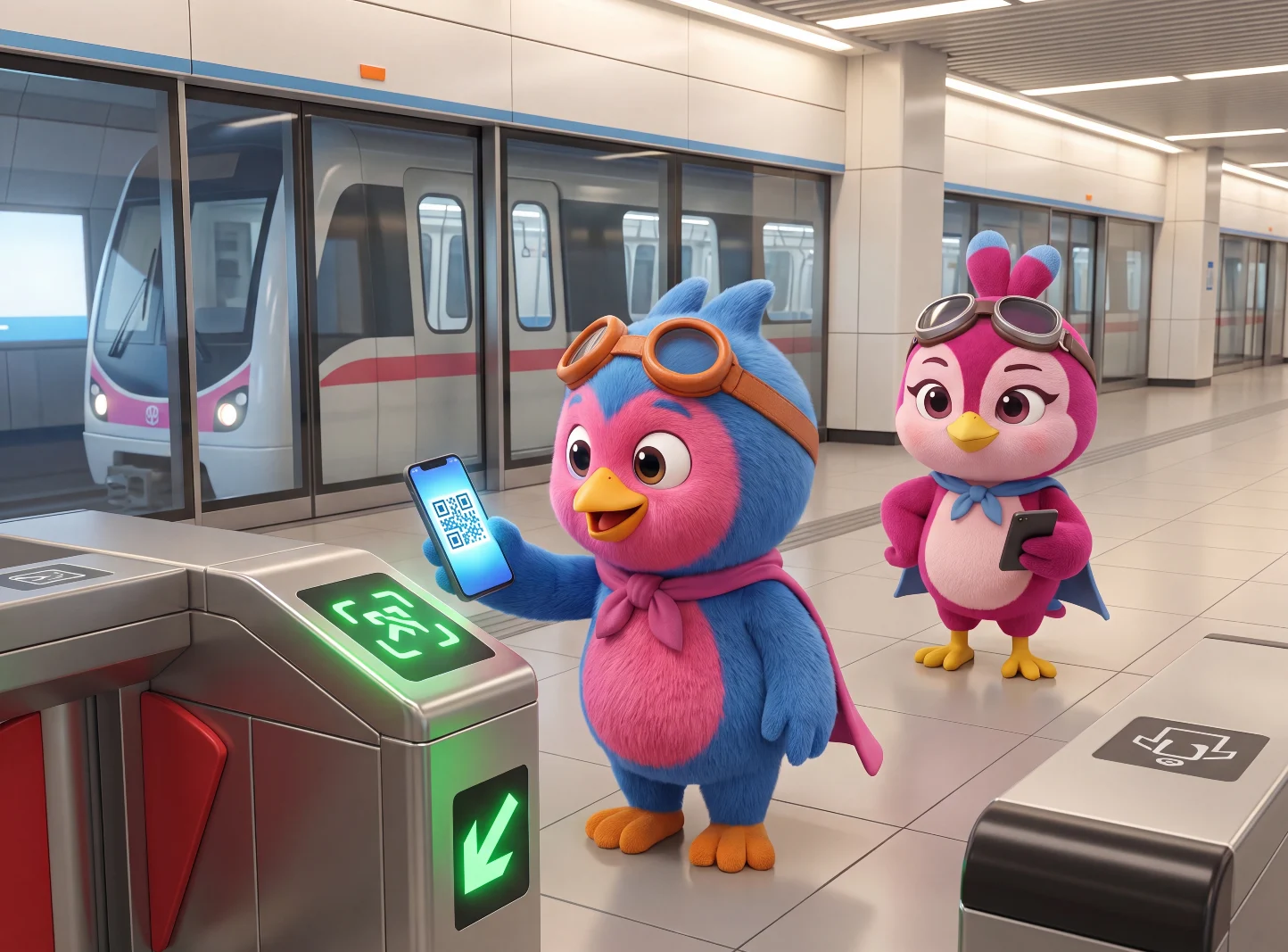
In China, modern metro lines have been built and are successfully operating in more than 55 major cities. The metro stations are distinguished by absolute cleanliness, clear navigation in English, and a high level of security. City buses are ideal for short trips or traveling to areas where railway tracks have not yet been laid. Payment in the metro and buses is made everywhere contactless via QR code (Alipay or Nihao China). In the metro, you need to scan the code on the turnstile when entering and again when exiting - the system itself will deduct the exact amount for the distance. In buses, the principle is the same: you scan when entering through the front door and when exiting through the back door; if you forget to scan at the exit, the system will deduct the maximum fare for the entire route. The main rule for both types of transport: always scan twice - at the entrance and at the exit.
● Transport section on Alipay. Select the desired city and generate a custom QR code to automatically debit funds during transit;
● Payment via Nihao China. The program from UnionPay allows you to quickly issue a virtual transport code that works in subways and buses across the country;
● Contactless bank cards. On Beijing, Shanghai, Guangzhou, and Chengdu metro lines, turnstiles support direct payment with Visa and Mastercard cards.
Choose the contactless payment method that works best for you before your first trip around the city. If you encounter difficulties while passing through the turnstiles, contact the station duty officer and show them your smartphone screen. Remember that all passengers are required to undergo a personal belongings scanning procedure before entering the metro platform. Carrying piercing and cutting objects, gas cylinders, and any flammable liquids is strictly prohibited by safety regulations.
Most metro lines operate from 5:30 AM to 11:30 PM. Keep in mind that 15 minutes before the station closes, they stop letting passengers inside. During peak hours (from 7:30 to 9:00 and from 17:30 to 19:00), some stations in the center block the entrance to avoid congestion - it is better to plan your trips for a different time.
Airplane
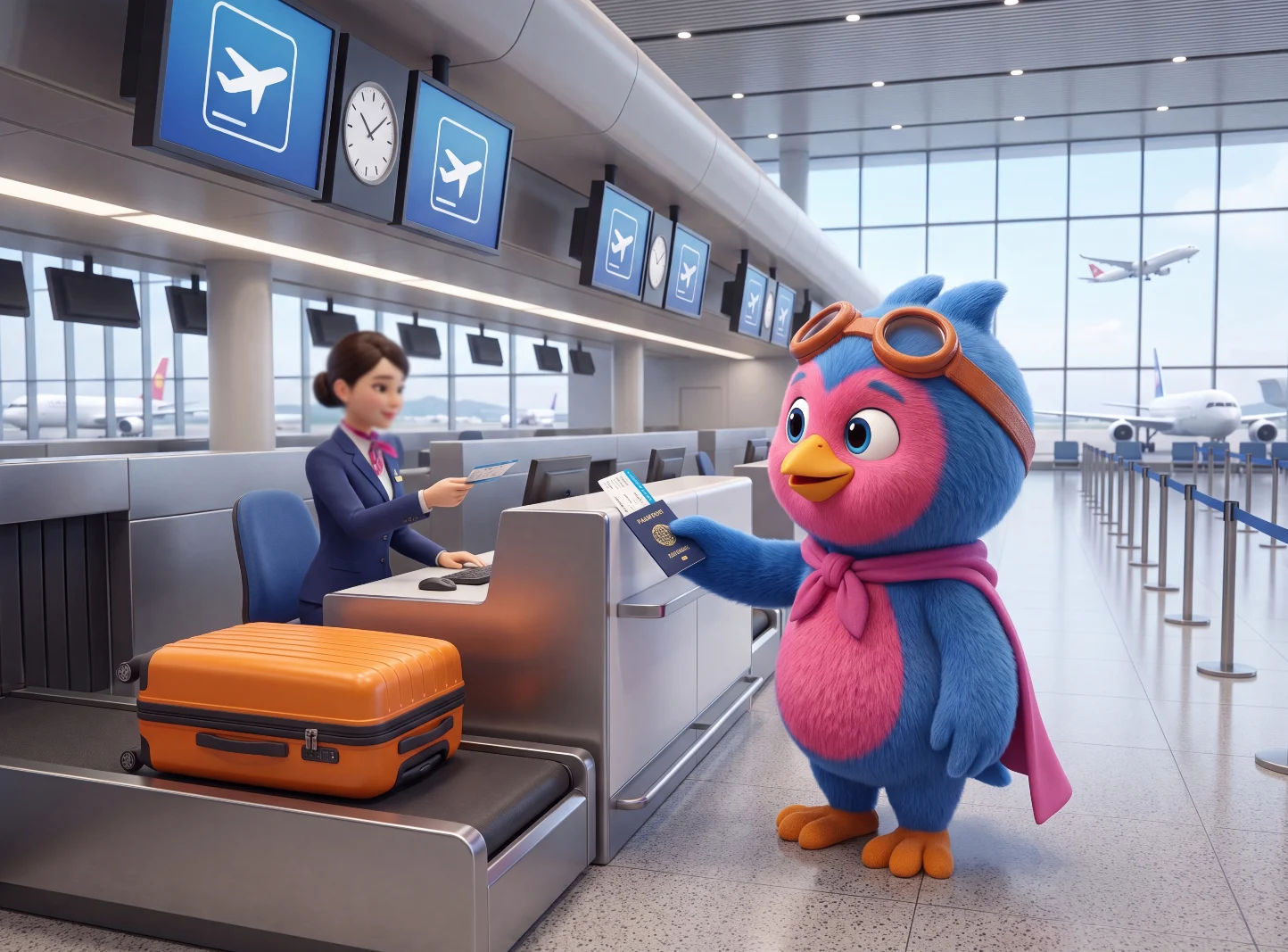
Despite the popularity of high-speed trains, in some cases, the plane remains the most convenient way to travel across China. The country occupies a vast territory, so travel between individual regions can take 8-10 hours or more. If time is limited, a domestic flight will significantly shorten the journey.
Air communication is well-developed in almost all provinces. Large cities are served by modern international and domestic airports, and the number of daily flights allows for the selection of a convenient departure time. The cost of tickets for domestic flights is usually stable and starts from about 100 US dollars.
● Bilet purchase. Boarding passes for local Chinese airlines can be purchased in advance through the Russian-language aggregator Trip.com;
● Flight registration. Foreign tourists are advised to complete the registration procedure directly at the physical counter at the airport.
Online systems of local carriers often fail to correctly recognize and process the passport data of foreign citizens. Therefore, it is best to arrive at the departure terminal in advance to calmly process boarding documents and hand over your luggage. Don't forget to check the requirements for carrying hand luggage, which may vary across China's domestic carriers. To overcome the language barrier at airports, you can use prepared phrases or useful digital applications.
Be careful with local budget airlines. Their cheap fares often do not include free baggage transportation in the cargo compartment at all - only small hand luggage (up to 7 kg). Additional payment for a suitcase at the airport may cost more than the ticket itself. Always read the tariff rules before purchasing.
Conclusion

China has gone far in terms of digitalizing daily life and has almost completely abandoned the use of paper money. To comfortably move around megacities, you will need a properly configured smartphone with stable network access. Software preparation must begin before passing through border control at the arrival airport. Without this, you will not be able to use basic services, including buying metro tickets or booking a car to your hotel.
● Payment systems (Alipay and WeChat). Download the Alipay app, link your Visa or Mastercard international bank card to it, and use your wallet to pay for purchases, transportation, services, and call Didi;
● Booking and tickets (Trip.com). Install the app in advance to purchase tickets for high-speed trains and domestic flights, book hotels, and book other tourism services in one place;
● Mobile Internet. Purchase a local physical card at the airport in advance or connect an e-SIM technology with an installed VPN service to access familiar resources;
● Nihao China digital assistant. Install this official application from UnionPay, which features a convenient Russian-language interface, a built-in currency converter, and voice translator;
● Maps for navigation. Since Google's mapping service is blocked in China, use the pre-installed Apple Maps maps on your smartphone or download the Chinese equivalent Baidu Maps or Amap.
Setting up these applications will take you very little time, but will save you from stress during the first hours of your stay in a foreign country. It is also worth changing a small amount of cash yuan in case of unexpected failures during contactless payment. Cash can be withdrawn at ATMs of large state-owned banks such as Bank of China or ICBC. Now that your digital profile is fully ready, you can proceed to planning your trips between Chinese regions. China's transport system is designed to be as efficient as possible. It is enough to set up your payment profile on your smartphone once, and all the country's infrastructure will become accessible and understandable to you.
Save this note to your phone to use for traveling around China:
Become a guide to the world of travel


